A maximum flight-time figure is useful for comparing aircraft, but it is a poor countdown for a filming session. Before putting that number in a buying spreadsheet, read the test description beneath it. Two drones can advertise similar endurance while being measured with different batteries, speeds and camera settings.
Read the conditions beside the headline
DJI specifies up to 45 minutes for the Air 3S in a controlled, windless-equivalent test at sea level, flying steadily with the camera in Photo mode until a forced landing caused by battery depletion. That is a manufacturer measurement, not 45 minutes of recording with enough charge left for the trip home.
Keep battery versions separate
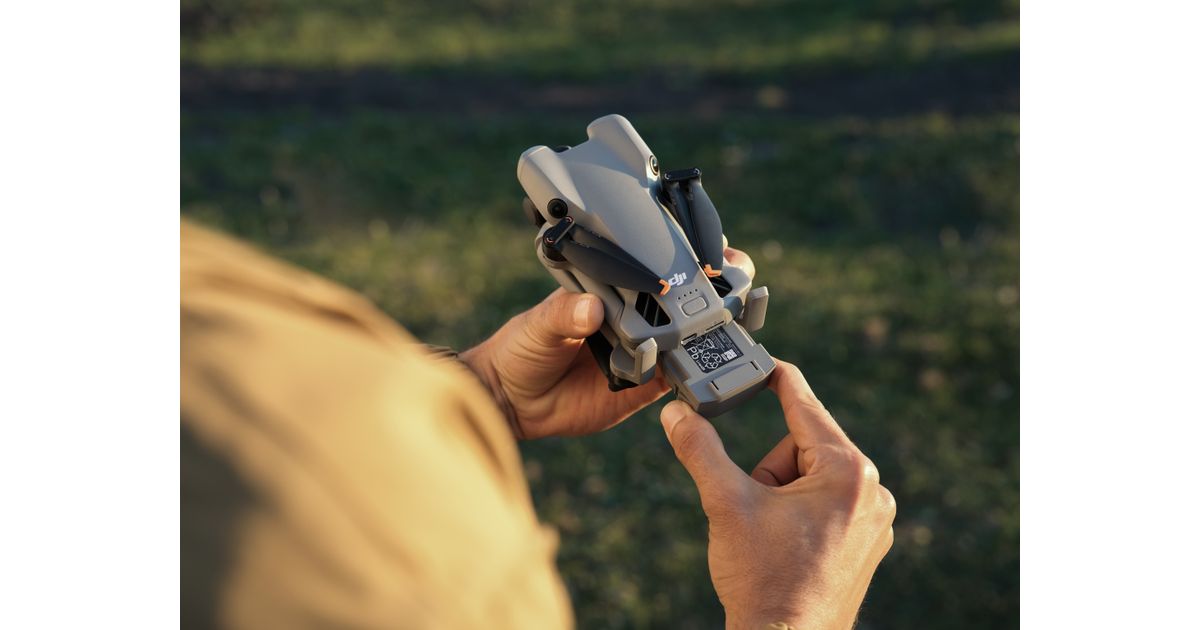
The Mini 5 Pro makes the comparison clearer. DJI lists maximum times of 36 minutes with its standard battery and 52 with the Battery Plus. It also publishes a separate typical-flight test: 21 and 33 minutes respectively, using a breezy route, 4K/60 recording and a return-to-home sequence. These are different test procedures. Neither pair predicts every outing, and the larger battery changes the aircraft’s weight.
Plan a session around shots
Write down the clips you need before takeoff: an establishing view, a slow approach and one detail, for example. Include time to reach the subject, settle the framing, repeat a useful pass and return. Repositioning and waiting for a moving subject use the same battery as recording.
Build your own reference
After a few uncomplicated flights, record the battery fitted, conditions, recording mode and elapsed time at landing. Keep a separate note of the charge remaining. This gives you a more relevant reference than a headline specification. Do not run a battery to depletion to reproduce the manufacturer’s test. Follow the aircraft’s alerts and manual, and leave room for an earlier return when conditions or the route change.