
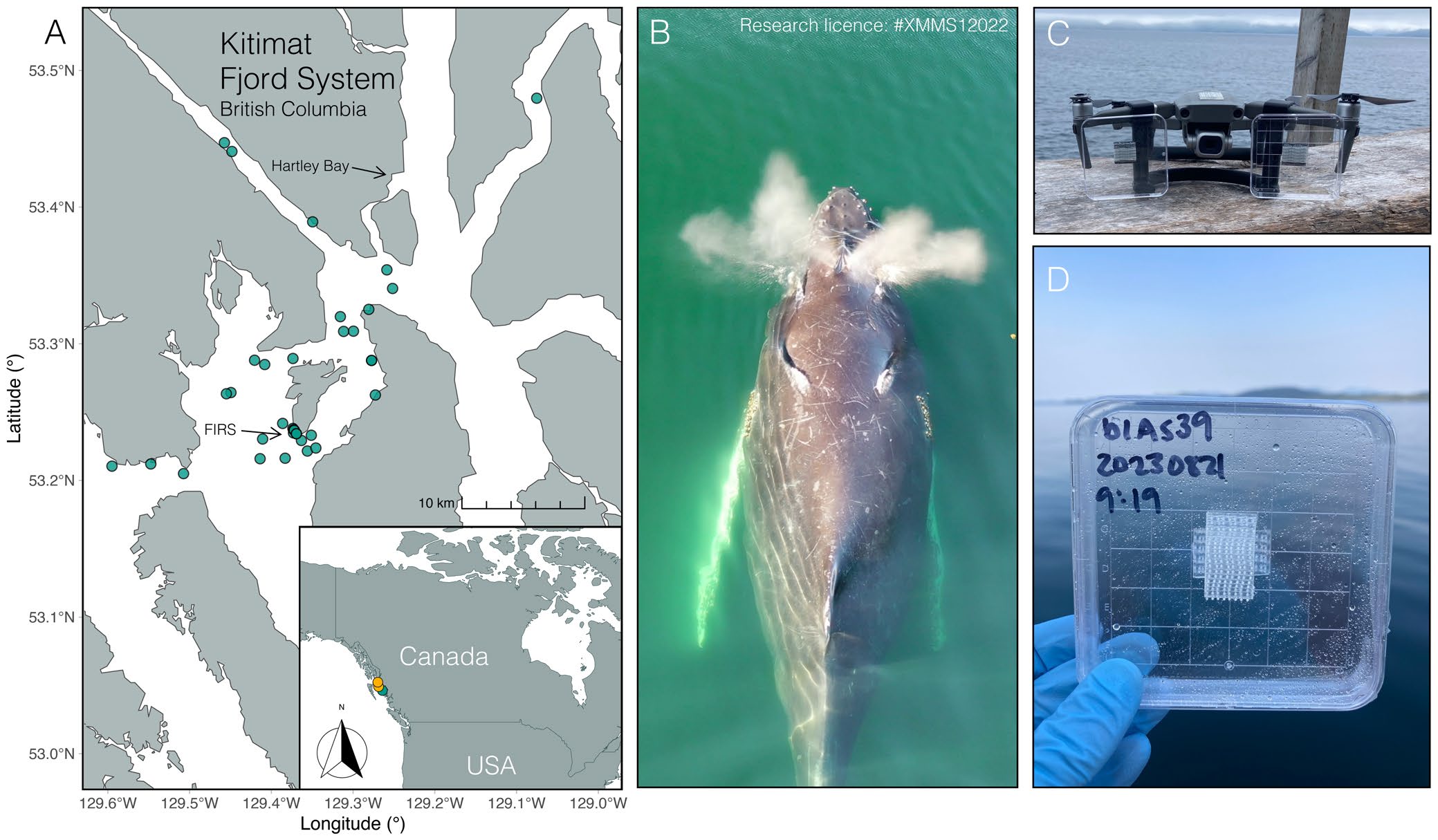
Researchers have used small drones carrying sterile Petri dishes to collect droplets from humpback whale exhalations off British Columbia. The samples yielded whole-genome data without taking skin and blubber biopsies. The University of St Andrews announced the study on 17 November; NPR reported on it on 21 November.
The team collected 58 breath samples from 26 whales. About 84% of the DNA in the samples came from the whales themselves. Repeat samples from the same animals produced matching genomic results, including comparisons with previously collected biopsy samples.
The study produced low-coverage nuclear genomes and higher-coverage mitochondrial genomes. Whole-genome sampling here does not mean every position was read with equally high confidence. The data can help researchers study genetic diversity, relatedness and population health.
These were permitted research flights, with sampling stopped if a whale reacted. The findings concern humpbacks sampled in this study; they do not establish that approaching wildlife with a drone is harmless. For aerial-imaging readers, it is a useful example of a camera drone serving as a scientific sampling platform.