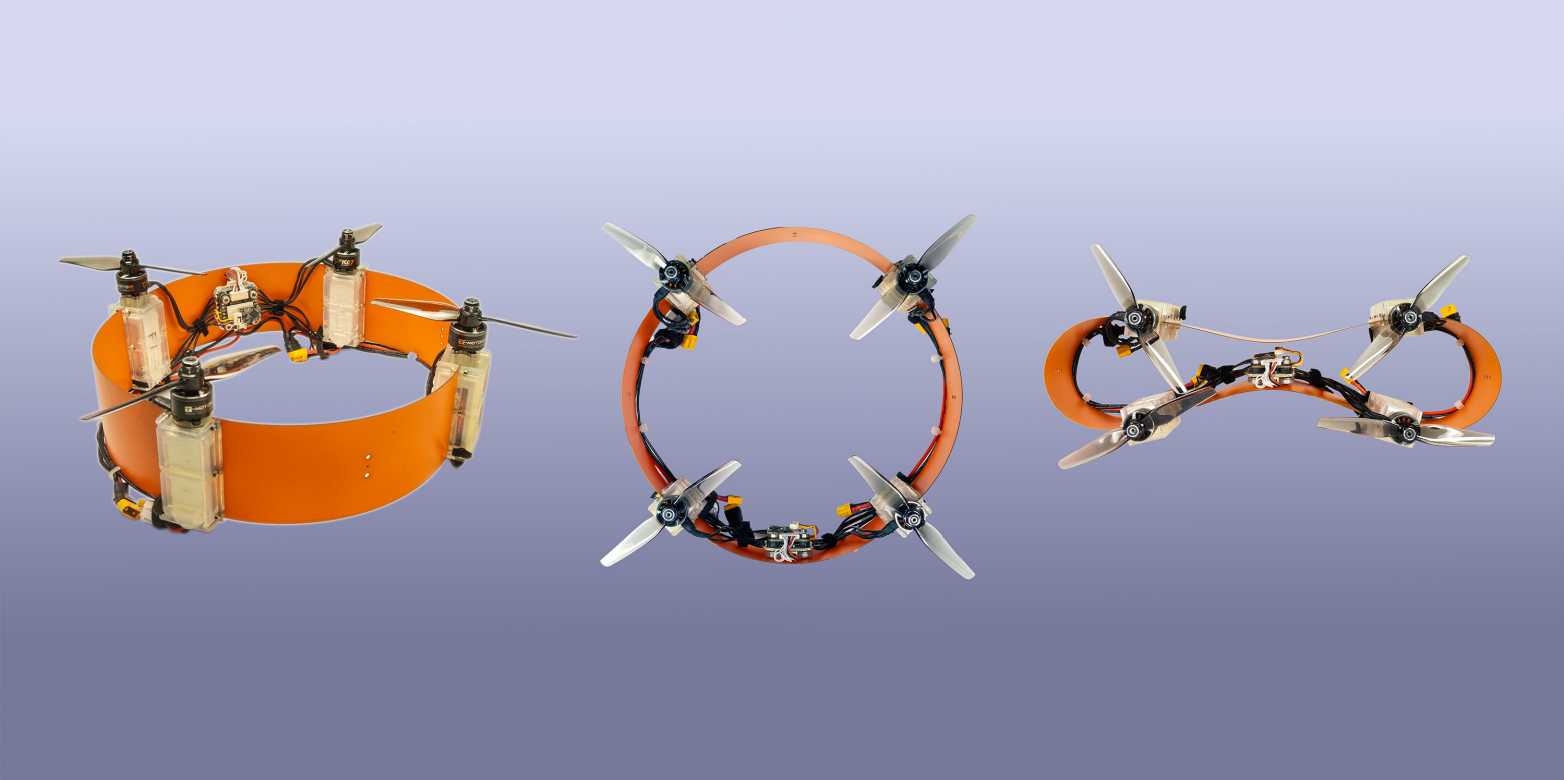
ETH Zurich researchers have built FlexiQuad around a flexible ring instead of a rigid central body. Its four rotors, batteries and controller sit around the frame. On impact, the ring bends to absorb part of the collision energy, helping the aircraft keep flying.
In its 3 November account, ETH Zurich reports flight speeds up to 80 km/h and collision tests at around 25 km/h. These are separate test results: surviving an impact at the drone’s maximum flight speed has not been established. New Atlas covered the project on 21 November.
The frame flexes sideways while remaining stiffer vertically, allowing the rotors to transmit the forces needed for flight. The researchers also trained a recovery response using reinforcement learning: after an impact, onboard motion sensors help the drone stabilise before autonomous flight resumes.
The flexible structure brings a filming problem. Oscillations after a collision can blur onboard camera images and complicate navigation. The team is still developing the system; this research prototype is not a newly launched travel camera drone.