
DJI Phantom 4 Pro V2.0
Phantom 4 Pro V2.0 is the discontinued 2018 hardware revision with OcuSync transmission and a revised propulsion system. It retains the 1-inch, 20 MP camera, mechanical shutter and H.264 4K/60 recording. DJI lists a 1,375 g aircraft weight and wireless viewing through compatible DJI goggles.
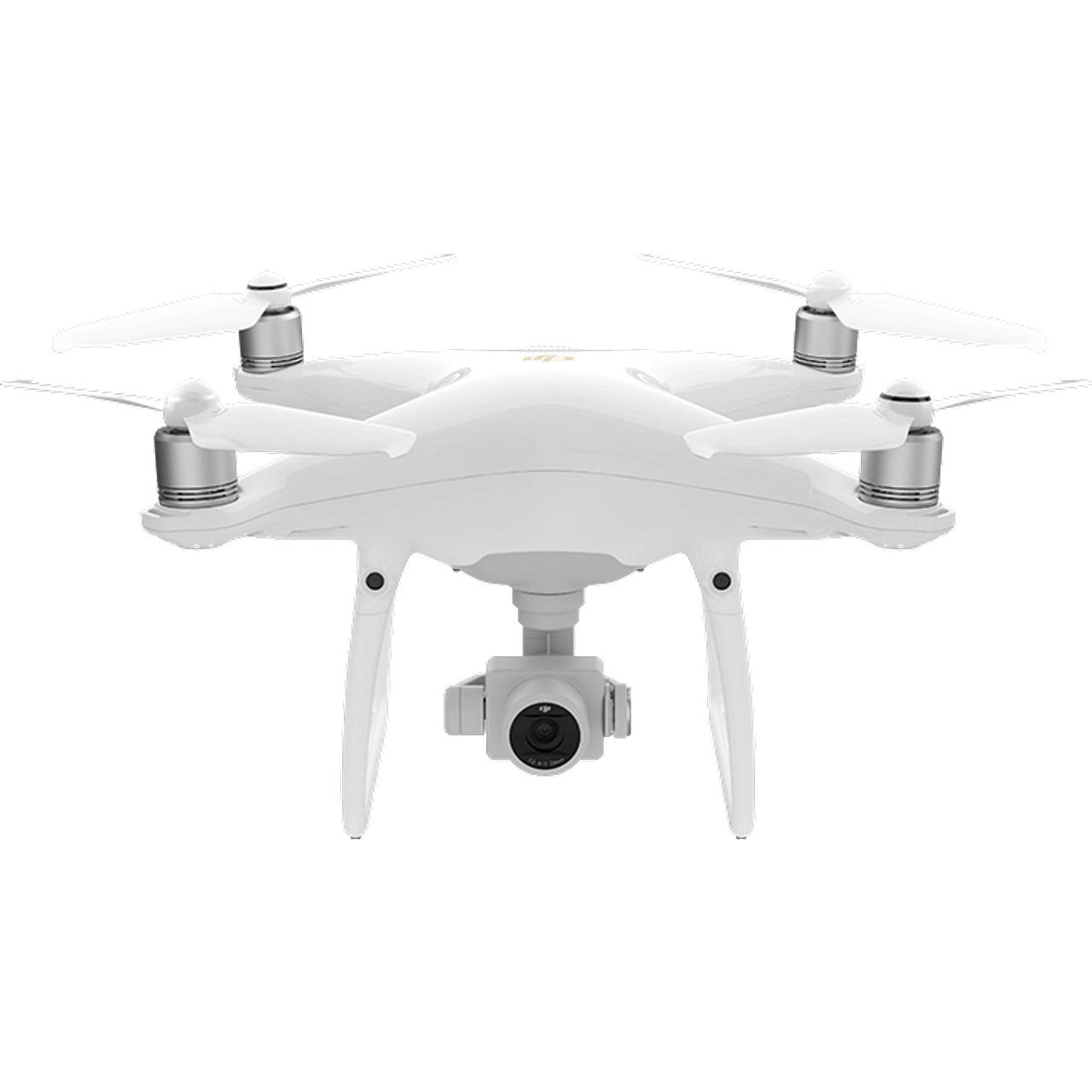
Official DJI product render of Phantom 4 Pro V2.0.Photo: DJI · Manufacturer product image; rights remain with the rights holder. · Image source Image downloaded unchanged from the official DJI product page.
At a glance.
Specifications below are manufacturer claims. Check the original documentation for test conditions and configuration details.
- Weight
- 1375 g
- Maximum flight time
- 30 min
- Camera sensor
- 1-inch CMOS; 20 MP effective
- Maximum video
- H.264: 3840 × 2160 or 4096 × 2160 up to 60 fps; H.265: up to 30 fps at either 4K size
- Storage
- microSD up to 128 GB
- Obstacle sensing
- Front/rear vision; downward positioning; side infrared only in Beginner/Tripod modes
- Ready-to-fly weight
- 1375 g
- Battery energy
- 89.2 Wh · 89.8 Wh
- Price reference
Questions about DJI Phantom 4 Pro V2.0
What take-off weight is listed for DJI Phantom 4 Pro V2.0?
1375 g (Aircraft; Standard configuration) — With battery and propellers. Separate controller, spares and bag are additional.
What flight time is listed for DJI Phantom 4 Pro V2.0?
≈30 min (Aircraft; Standard configuration) — At sea level in calm conditions, flying in ATTI mode. DJI says flight pattern, weather and altitude affect flight time.
Which sensor format is listed for DJI Phantom 4 Pro V2.0?
1-inch CMOS (Camera; Standard configuration)
Which FPV video systems are listed for DJI Phantom 4 Pro V2.0?
DJI OcuSync (Video system; Standard configuration)
Full specifications
Data available for 71 of 120 characteristics
Figures may apply to different cameras, batteries or operating regions. Read the configuration, test conditions and source alongside each value. An unspecified capability does not mean it is absent.
- Purpose and aircraft type
- Ready-to-fly weight
- 1375 gAircraftStandard configuration
With battery and propellers. Separate controller, spares and bag are additional.
- Maximum flight time
- ≈30 minAircraftStandard configuration
At sea level in calm conditions, flying in ATTI mode. DJI says flight pattern, weather and altitude affect flight time.
- Sensor optical format
- Shutter type
- Mechanical: 8 s to 1/2000 s; electronic: 8 s to 1/8000 sCameraStandard configuration
- Effective pixels
- Video width
- 4096 pxCameraH.264 Cinema 4K video, 60 fps
H.264 mode.
4096 pxCameraH.265 Cinema 4K video, 30 fpsH.265 mode.
- Video height
- 2160 pxCameraH.264 Cinema 4K video, 60 fps
H.264 mode.
2160 pxCameraH.265 Cinema 4K video, 30 fpsH.265 mode.
- Video frame rate
- 60 fpsCameraH.264 Cinema 4K video, 60 fps
H.264 mode.
30 fpsCameraH.265 Cinema 4K video, 30 fpsH.265 mode.
- Maximum video bitrate
- Photo width
- Photo height
- Mechanical gimbal axes
- Equivalent focal length
- 24 mmCameraStandard configuration
35 mm equivalent focal length.
- Minimum aperture f-number
- Maximum aperture f-number
- Field of view
- Maximum ISO
- ≤3200CameraVideo: automatic ISO
Video, automatic ISO.
≤3200CameraPhoto: automatic ISOPhoto, automatic ISO.
- RAW photographs
- Video codecs
- Photo formats
- Minimum manual camera tilt
- -90 degCameraStandard configuration
Controllable camera pitch.
- Maximum manual camera tilt
- 30 degCameraStandard configuration
Controllable camera pitch.
- Subject tracking
- Tracking methods
- Supported subjects
- Person, Bicycle, Vehicle, AnimalAircraftActiveTrack
Subject classes listed for this model or series.
- Tracking modes
- Obstacle detection
- Obstacle detection directions
- Left, RightSensing systemSide infrared sensors
Side infrared sensors work only in Beginner Mode and Tripod Mode.
- Automatic obstacle avoidance
- Automatic obstacle avoidance directions
- ForwardSensing systemForward vision sensors
Forward obstacle avoidance; other directions remain unverified here.
- Sensing technologies
- Stereo vision, UltrasonicSensing systemStereo vision and ultrasonic sensing
Stereo vision and ultrasonic positioning; side infrared sensors are listed separately.
- Supported detection/avoidance modes
- P-modeSensing systemVision positioning
Vision positioning in P-mode requires adequate light and a textured surface.
Beginner Mode; Tripod ModeSensing systemSide infrared sensorsMode restriction for the left and right infrared sensors only.
- Sensing speed ceiling
- 50 km/hSensing systemVision positioning: specification table
Downward vision positioning at 2 m above ground: 50 km/h, approximately 13.89 m/s. This is not an obstacle-avoidance speed.
- Minimum sensing illumination
- >15 luxSensing systemVision system
Vision system: a clearly patterned surface and illumination above 15 lux. This threshold does not apply to infrared sensing.
- Video viewing in goggles
- FPV video ecosystems
- Dji digitalVideo systemStandard configuration
DJI digital downlink; compatibility with goggles, air units and controllers requires separate checking.
- Exact air-unit/video systems
- Compatible goggles models
- DJI Goggles; DJI Goggles REVideo systemStandard configuration
DJI’s launch article names DJI Goggles; the model support FAQ additionally names DJI Goggles RE.
- Transmission system
- DJI OcuSyncRadio linkStandard configuration
Video transmission system; goggles compatibility remains unverified.
- Radio bands
- 2.400–2.483; 5.725–5.850Radio linkStandard configuration
Published remote-controller frequency bands.
2.400–2.483; 5.725–5.850AircraftAircraft radio: user manualAircraft radio bands. For the original Pro, the controller band ends at 5.825 GHz, while the aircraft table gives 5.850 GHz.
- Maximum link range
- ≤10000 mRadio linkPublished radio bandsFCC
Maximum radio-link distance without obstructions or interference. This is not a flight-endurance or return-trip rating.
≤6000 mRadio linkPublished radio bandsCEMaximum radio-link distance without obstructions or interference. This is not a flight-endurance or return-trip rating.
≤6000 mRadio linkPublished radio bandsSRRCMaximum radio-link distance without obstructions or interference. This is not a flight-endurance or return-trip rating.
≤6000 mRadio linkPublished radio bandsMICMaximum radio-link distance without obstructions or interference. This is not a flight-endurance or return-trip rating.
- Transmission power
- ≤26 dBmRemote controller2.4 GHzFCC
Remote-controller EIRP for the stated band and certification profile.
≤20 dBmRemote controller2.4 GHzCERemote-controller EIRP for the stated band and certification profile.
≤20 dBmRemote controller2.4 GHzSRRCRemote-controller EIRP for the stated band and certification profile.
≤17 dBmRemote controller2.4 GHzMICRemote-controller EIRP for the stated band and certification profile.
≤26 dBmRemote controller5.8 GHzFCCRemote-controller EIRP for the stated band and certification profile.
≤14 dBmRemote controller5.8 GHzCERemote-controller EIRP for the stated band and certification profile.
≤20 dBmRemote controller5.8 GHzSRRCRemote-controller EIRP for the stated band and certification profile.
≤26 dBmAircraftAircraft 2.4 GHz: user manualFCCAircraft EIRP for the stated band and certification profile; the remote-controller table is separate.
≤20 dBmAircraftAircraft 2.4 GHz: user manualCEAircraft EIRP for the stated band and certification profile; the remote-controller table is separate.
≤20 dBmAircraftAircraft 2.4 GHz: user manualSRRCAircraft EIRP for the stated band and certification profile; the remote-controller table is separate.
≤26 dBmAircraftAircraft 5.8 GHz: user manualFCCAircraft EIRP for the stated band and certification profile; the remote-controller table is separate.
≤14 dBmAircraftAircraft 5.8 GHz: user manualCEAircraft EIRP for the stated band and certification profile; the remote-controller table is separate.
≤26 dBmAircraftAircraft 5.8 GHz: user manualSRRCAircraft EIRP for the stated band and certification profile; the remote-controller table is separate.
- Link latency
- ≈220 msRadio linkController with mobile device
Controller without a built-in screen; latency depends on the mobile device and operating conditions.
160–180 msRadio linkController with screen: specification rangeThe specification lists 160–180 ms with the screen controller. The upper end of that range is 180 ms; actual latency varies.
- Live view height
- 720pRadio linkSmooth live view: manufacturer FAQ
720p live view; exact horizontal resolution remains unverified.
720pRadio linkNormal live view: manufacturer FAQ720p live view; exact horizontal resolution remains unverified.
1080pRadio linkHD live view: manufacturer FAQ1080p live view; exact horizontal resolution remains unverified.
- Live view frame rate
- 60 fpsRadio linkSmooth live view: manufacturer FAQ
Live-view frame rate, separate from recorded video.
30 fpsRadio linkNormal live view: manufacturer FAQLive-view frame rate, separate from recorded video.
30 fpsRadio linkHD live view: manufacturer FAQLive-view frame rate, separate from recorded video.
- Propeller model
- DJI 9455S quick-releasePropellerStandard configuration
Propeller model named in the model FAQ. Diameter and pitch remain unverified.
- Horizontal speed
- 72 km/hAircraftSport mode
Sport mode; converted from the published 72 km/h.
58 km/hAircraftATTI modeATTI mode: 58 km/h, approximately 16.11 m/s.
50 km/hAircraftP-mode: specification tableP-mode specification-table value, converted to m/s. The Advanced/Pro FAQ separately gives 14 m/s for this mode.
- Ascent speed
- 5 m/sAircraftPositioning mode (P-mode)
Positioning mode (P-mode).
- Descent speed
- 3 m/sAircraftPositioning mode (P-mode)
Positioning mode (P-mode).
- Wind resistance
- ≤10 m/sAircraftStandard configuration
Maximum rated wind resistance; usable filming conditions can be more restrictive.
- Battery capacity
- 5870 mAhBatteryStandard configuration
Aircraft flight battery.
- Nominal battery voltage
- 15.2 VBatteryStandard configuration
Aircraft flight battery.
- Battery energy
- 89.2 WhBatterySpecification table and user manual
DJI’s specification table and manual list 89.2 Wh, while the model FAQ lists 89.8 Wh. The discrepancy is unresolved.
89.8 WhBatteryModel FAQDJI’s specification table and manual list 89.2 Wh, while the model FAQ lists 89.8 Wh. The discrepancy is unresolved.
- Battery weight
- 468 gBatteryStandard configuration
Aircraft flight battery.
- Battery cell count
- Charging power
- ≤160 WBatteryBattery charging limit: website table
The web battery specification lists 160 W; the model manual lists 100 W. The difference remains unresolved.
≤100 WBatteryBattery charging limit: user manualThe flight-battery manual lists 100 W; the web specification lists 160 W. The difference remains unresolved. This is the battery limit, not the charger rating.
- Charging time
- ≈90 minBatteryManufacturer FAQ
Approximate full-charge time for the flight battery.
- Removable battery
- YesBatteryStandard configuration
Removable flight battery; power the aircraft off before removal.
- Battery chemistry
- Removable recording card
- Maximum recording card capacity
- Recording card requirements
- Class 10 or UHS-1; write speed ≥15 MB/sAircraftStandard configuration
Manufacturer microSD requirement.
- Product lifecycle
- DiscontinuedAircraftStandard configuration
DJI lists this model among products no longer available.
- Announcement date
Manufacturer sources
- DJI Phantom 4 Pro V2.0 — specifications and support
- DJI historical product catalogue
- DJI Phantom 4 Pro V2.0 — launch announcement
- DJI Phantom 4 Pro / Pro+ Series — user manual
Sources checked 15 Nov 2026. Specifications can change with accessories, firmware and region.